
AI-Driven Business Strategy Framework
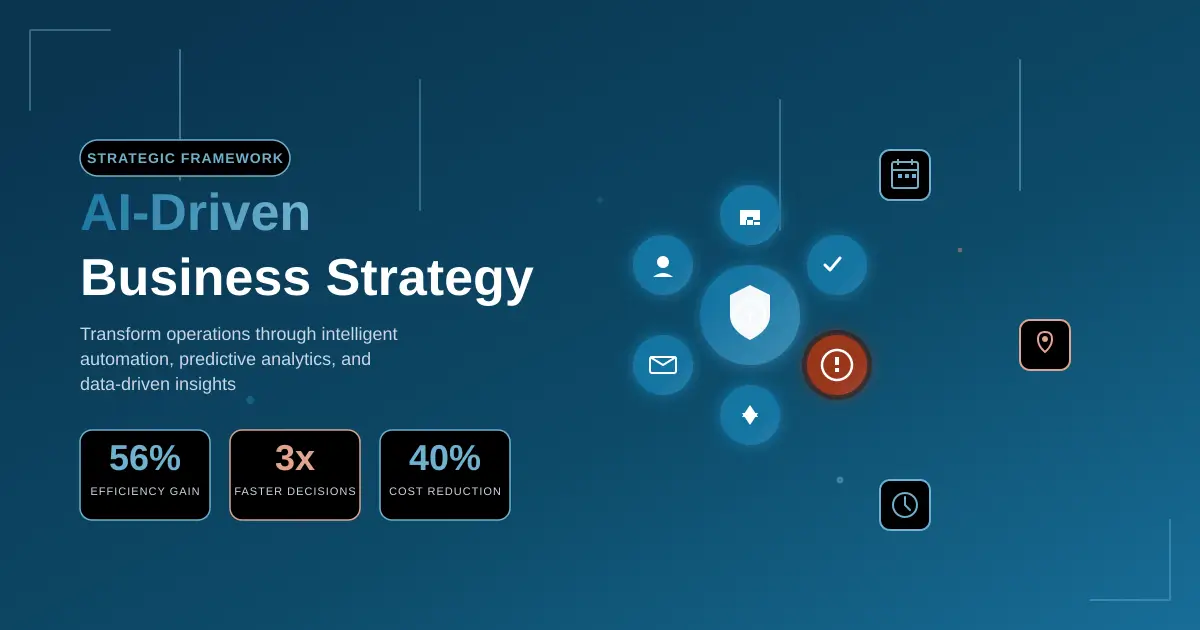
Strategic framework for integrating AI technologies into business operations to enhance efficiency, improve decision-making, and drive competitive advantage across healthcare, retail, and enterprise sectors.
Executive Summary
Artificial Intelligence integration represents a fundamental shift in how organizations operate and compete in the modern digital economy. This framework provides a structured approach to AI adoption, transforming business operations through intelligent automation, predictive analytics, and data-driven decision-making.
The Challenge: Organizations face increasing pressure to process growing data volumes, make faster decisions, and deliver personalized customer experiences while managing costs and operational complexity.
The Approach: A methodical 90-day implementation framework that identifies high-impact use cases, establishes clear metrics, and scales AI capabilities across operations while maintaining ethical standards and governance.
The Outcomes: Businesses implementing this framework report efficiency gains of up to 56%[1], significantly improved decision-making speed, and measurable cost reductions alongside enhanced customer satisfaction.
Strategic Framework
Assessment & Discovery
Identifying High-Impact Opportunities
The foundation of successful AI implementation begins with strategic assessment:
- Evaluate current operational bottlenecks and inefficiencies
- Identify repetitive, data-intensive processes suitable for automation
- Assess data quality, availability, and governance readiness
- Define clear business outcomes and key performance indicators
- Engage cross-functional stakeholders to ensure alignment
Data Readiness Evaluation
- Audit existing data infrastructure and quality standards
- Identify gaps in data collection, storage, and accessibility
- Establish data governance protocols and security measures
- Ensure compliance with regulatory requirements
- Plan for data integration across systems
Implementation Methodology
90-Day Transformation Roadmap
- Identify 2-3 high-impact use cases
- Audit data quality
- Establish KPIs
- Form cross-functional team
- Business case documentation
- Stakeholder alignment
- Baseline metrics
- Build minimum viable model
- Validate with real data
- Measure against KPIs
- Collect user feedback
- Working prototype
- Performance validation
- User feedback integration
- Integrate into workflows
- Implement change management
- Document processes
- Establish monitoring
- Production deployment
- Process documentation
- Monitoring dashboards
Change Management Integration
- Develop comprehensive training programs for workforce enablement
- Establish clear communication channels for stakeholder updates
- Create feedback mechanisms for continuous improvement
- Document processes, risks, and operational controls
- Build organizational capacity for ongoing AI utilization
Technology Applications
Enterprise Resource Planning (ERP)
Operational Intelligence
AI-enhanced ERP systems transform business operations by analyzing data across departments to provide actionable insights, optimize resource allocation, and improve forecasting accuracy.
Key Capabilities:
- Cross-functional data analysis and pattern recognition
- Automated workflow optimization
- Resource allocation recommendations
- Cost reduction through process efficiency
- Real-time operational visibility
Customer Relationship Management (CRM)
Customer Intelligence
CRM systems equipped with AI capabilities revolutionize customer engagement through predictive analytics and personalization at scale.
Key Capabilities:
- Behavioral analysis and customer segmentation
- Predictive needs assessment and proactive engagement
- Personalized communication strategies
- Churn prediction and retention optimization
- Sales pipeline optimization
Supply Chain Management (SCM)
Logistics Optimization
AI transforms supply chain operations through predictive modeling, route optimization, and proactive risk management.
Key Capabilities:
- Demand forecasting and inventory optimization
- Delivery route optimization for cost reduction
- Predictive maintenance for transportation assets
- Supply chain disruption anticipation
- Supplier performance analytics
Customer Service Automation
24/7 Engagement Platform
AI-driven chatbots and virtual assistants provide consistent, scalable customer service while continuously improving through machine learning.
Key Capabilities:
- Round-the-clock inquiry handling
- Natural language processing for context understanding
- Automated issue resolution and routing
- Sentiment analysis for service quality
- Continuous learning from interactions
Predictive Maintenance
Operational Reliability
In industries where equipment reliability is critical, AI analyzes sensor data to predict maintenance needs before failures occur.
Key Capabilities:
- Real-time equipment health monitoring
- Failure prediction and prevention
- Maintenance scheduling optimization
- Extended asset lifespan
- Reduced downtime and operational disruptions
Fraud Detection & Security
Risk Mitigation
AI-driven fraud detection systems analyze transaction patterns in real-time to identify and prevent fraudulent activities.
Key Capabilities:
- Pattern recognition across transaction data
- Anomaly detection and real-time alerts
- Adaptive learning from new fraud patterns
- Reduced false positives through intelligent analysis
- Brand protection and customer trust enhancement
Industry Applications
Healthcare Sector
Early Disease Detection
AI algorithms demonstrate significant potential in improving diagnostic accuracy and patient outcomes through pattern recognition in medical data.
Sepsis Early Warning Systems
- Analysis across 409 hospitals demonstrated AI’s capability for early sepsis prediction[2]
- Models achieved 48-hour advance warning compared to traditional methods
- 21-32% improvement in prediction accuracy over conventional approaches
- Life-saving interventions enabled through timely detection
Cardiac Risk Assessment
- Machine learning algorithms (K-Nearest Neighbors, Decision Trees) enhance heart disease detection[3]
- Improved diagnostic precision compared to traditional screening methods
- Earlier intervention opportunities for high-risk patients
- Reduced mortality through proactive treatment planning
Cancer Diagnostics
- AI algorithms demonstrate superior accuracy in detecting colon cancer from biopsy images[4]
- Reduced human error in pathological analysis
- Faster diagnostic turnaround times
- Enhanced precision in early-stage detection
Retail Sector
Customer Experience Transformation
AI enables retailers to compete effectively through personalized experiences and operational optimization.[5]
Dynamic Inventory Management
- Real-time stock optimization based on predictive demand
- Reduced overstock and stockout situations
- Improved capital efficiency through better inventory turnover
- Enhanced customer satisfaction through product availability
Personalized Shopping Experiences
- Individual customer preference analysis and recommendation
- Tailored marketing communications and offers
- Improved conversion rates through relevance
- Enhanced customer loyalty and lifetime value
Predictive Demand Forecasting
- Anticipation of seasonal trends and customer needs
- Optimized purchasing and production planning
- Reduced waste through accurate forecasting
- Improved profitability through demand alignment
Measuring Success
Key Performance Indicators
Operational Efficiency Metrics
Customer Experience Metrics
Business Growth Metrics
Governance & Ethics
Responsible AI Framework
Model Transparency
Maintain comprehensive documentation of AI systems to ensure accountability and enable effective oversight.
- Document data sources, features, and model limitations
- Establish clear ownership and decision-making authority
- Create audit trails for model decisions and outcomes
- Provide explainability for stakeholder understanding
- Enable regulatory compliance through transparency
Bias Monitoring & Fairness
Implement continuous evaluation processes to ensure equitable AI system performance across all user populations.
- Regular fairness assessments across demographic groups
- Model drift detection and correction procedures
- Diverse training data to minimize bias
- Ongoing validation against fairness metrics
- Remediation protocols for identified bias
Data Protection & Privacy
Establish robust security protocols to protect sensitive information and maintain customer trust.
- Role-based access controls for data security
- Encryption standards for data in transit and at rest
- Compliance with GDPR, CCPA, and industry regulations
- Privacy-by-design principles in system architecture
- Regular security audits and vulnerability assessments
Governance Structure
Create clear organizational frameworks for AI oversight and accountability.
- Defined ownership and escalation paths
- Regular review cadence for model performance
- Cross-functional governance committees
- Clear policies for AI use and limitations
- Stakeholder communication protocols
Implementation Considerations
Addressing Key Challenges
Initial Investment Requirements
AI implementation requires significant upfront investment in technology, talent, and infrastructure.
Mitigation Strategies:
- Start with high-ROI use cases to demonstrate value quickly
- Leverage cloud-based AI services to reduce infrastructure costs
- Pilot programs to validate approach before full-scale investment
- Phased implementation to spread costs over time
- Build internal capabilities alongside external partnerships
Data Quality & Availability
Poor data quality undermines AI effectiveness and can lead to flawed insights.
Mitigation Strategies:
- Conduct thorough data quality audits before implementation
- Establish data governance frameworks and quality standards
- Invest in data cleaning and preparation processes
- Create feedback loops for continuous data improvement
- Implement monitoring systems for ongoing quality assurance
Skills & Talent Gap
Organizations often lack internal expertise for effective AI implementation and management.
Mitigation Strategies:
- Develop comprehensive training programs for existing staff
- Partner with AI technology providers for knowledge transfer
- Hire strategic AI talent for core capabilities
- Build cross-functional teams combining domain and technical expertise
- Create continuous learning culture around AI technologies
Change Management Resistance
Employees may resist AI adoption due to fears about job security or process changes.
Mitigation Strategies:
- Communicate AI as augmentation, not replacement
- Involve employees early in implementation planning
- Provide clear training and support resources
- Celebrate early wins and share success stories
- Address concerns transparently and empathetically
Getting Started
Assessment Process
Organizations considering AI adoption should begin with a structured evaluation:
- Identify Pain Points: Document current operational challenges and inefficiencies
- Evaluate Readiness: Assess data quality, technical infrastructure, and organizational capacity
- Define Objectives: Establish clear, measurable business outcomes
- Prioritize Use Cases: Select 2-3 high-impact opportunities for initial focus
- Build Business Case: Calculate expected ROI and resource requirements
Strategic Partnership
Successful AI implementation often benefits from expert guidance and strategic support.
Consultation Services Include:
- Strategic assessment and roadmap development
- Use case identification and prioritization
- Technology selection and vendor evaluation
- Implementation planning and change management
- Ongoing optimization and capability building
Next Steps
Organizations ready to begin their AI transformation journey should consider:
- Scheduling an initial assessment consultation
- Reviewing current operational data and processes
- Engaging stakeholders across business functions
- Evaluating technical infrastructure and requirements
- Developing preliminary implementation timeline
About This Framework
This strategic framework was developed based on extensive research into AI applications across healthcare, retail, and manufacturing sectors. The methodologies and recommendations reflect proven approaches from organizations that have successfully implemented AI-driven transformation initiatives.
Research Foundation
This framework incorporates insights from:
- Deloitte’s State of AI in the Enterprise research (2024)
- Healthcare AI applications in sepsis detection and cardiac risk assessment
- Retail transformation case studies from enterprise technology providers
- Industry best practices in AI governance and ethics
Author
Sondra Hoffman specializes in Management Information Systems (MIS) and Business Intelligence (BI), helping organizations leverage technology for operational excellence and competitive advantage. With expertise in strategic planning, process improvement, and technology integration, Sondra bridges the gap between technical capability and business value.
Contact
Ready to explore AI-driven transformation for your organization?
Schedule a consultation to discuss your specific operational challenges and opportunities for AI integration.
Email: info@sondrahoffman.online
Phone: (707) 862-3937
LinkedIn: linkedin.com/in/shoffman4
References
Disclaimer
This framework provides general guidance for AI strategy development and should not be construed as legal, financial, or professional advice specific to any organization. Organizations should consult with appropriate professionals regarding their specific implementation needs and regulatory requirements.
Acknowledgements
This portfolio case study was developed with assistance from generative AI technology (OpenAI’s ChatGPT) during the research and writing process. All content has been reviewed, edited, and approved by Sondra Hoffman, who takes full responsibility for the accuracy and appropriateness of this publication.